Showing posts with label foreigners. Show all posts

Tuesday, April 9, 2013

Vietnam still doesn’t know how to spend money on tourism promotion — TalkVietnam


Vietnam still doesn’t know how to spend money on tourism promotion

VietNamNet Bridge – Surveys have found out that 70-80 percent of foreigners traveled to Vietnam after they heard about the trips to Vietnam from relatives or friends, not because they got the information about Vietnam when they attended tourism trade fairs or roadshows, or seeing ads on CNN or BBC.
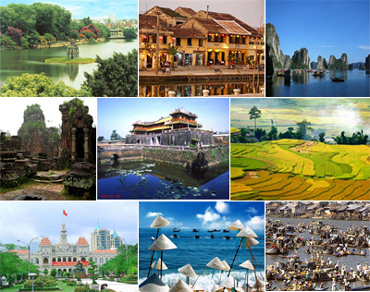
20130410092532-news-s1147.jpg
A senior executive of Trong Diem Trade and Tourism Company, which were present at the last 10 trade fairs in Berlin (ITB) has attributed this to the unprofessional and unmethodical advertisement campaigns carried out by Vietnam.
The number of German tourists to Vietnam in the first three months of the year dropped dramatically by 51.7 percent in comparison with the same period of 2012, even though Germany has been one of the key markets, where Vietnam regularly runs tourism promotion campaigns. Especially, the Germany – Vietnam direct flights allow travelers to take trips in a convenient and time-saving way.
The above senior executive said the ITB’s organization board offered free admissionto local people on the two last days of the trade fair, which attracted a very high number of visitors.
While it was very crowded and noisy at the other stalls, the Vietnamese stall was so quiet because many directors of travel firms left for Vietnam on the last two days.
The director of a travel firm that left before the closing ceremony said that he came there just to meet foreign partners, and he did this on the first days of the trade fair already. He did not think he needed to stay there for some more days, because Vietnam did not organize any special events to attract individual tourists.
Another director complained about the irresponsible preparation of the Vietnamese agencies for the trade fair. ITB opened on March 5, but travel firms were gathered just some days in advance, which forced them to make preparations in a hurry. Especially, the stall’s layout of the Vietnamese stall shown to travel firms was quite different from the one used at the trade fair.
Where to spend money on?
Vietnam, a poor country, once accepted to pay $300,000 to advertise Vietnam’s tourism on CNN in 2007, and $400,000 to post ad pieces on BBC, CNN, and on 27 taxis in London in July 2009. However, no one can say for sure about the effectiveness of the ad campaigns.
In 2012, the Ministry of Culture, Sports and Tourism, once again, intended to spend big money to post ad pieces on 32 buses in Australia for one month. Travel firms then immediately criticized the plan, saying they could not understand what the ministry strived for when running the program.
A report by Nielsen, a market survey firm, showed that more and more tourists access Internet to seek tourism information. About 61 percent of tourists nowadays seek information about the destination points before or when they begin the trips, while 48 percent discuss about trips on online forums. The advertisement on TVand radio ranks nearly at the bottom of the list of the main channels tourists use to seek information.
Director of the Malaysian Tourism Promotion Agency–Victor Wee, has advised Vietnam not to scatter money everywhere, but focus on some key programs to attract tourists.
He himself admitted that he doesn’t like watching TV. Malaysia once relied too much on TV ads, while did not make appropriate attention to Internet, which turns out to be a very effective and cheap advertisement channel

Sunday, July 22, 2012

| Foreigners unaware of Vietnam’s new tax refund

Foreigners inquire about Vietnam’s new tax refund policy at Ho Chi Minh City’s Tan Son Nhat International Airport
Vietnam started issuing value added tax refunds to foreign visitors on July 1 but so far, no foreigners have taken advantage of the service being offered at Noi Bai and Tan Son Nhat International Airports.
Customs staff members said the message has not been well delivered and tourism agencies need to spread the word more effectively.
A customs employee in charge of the refund booth at Tan Son Nhat Airport told Thoi Bao Kinh Te Saigon that a few foreigners have stopped by to inquire about the service, but none have used it.
Tran The Dung, deputy director of The He Tre Tourism Company in Ho Chi Minh City, said many foreign visitors in Vietnam want tax refunds and described the policy as a “good” one.
“But the most important thing is to make the process quick and simple. Several countries have made their visitors wait too long [at airports] for the refunds, turning the service into a burden,” Dung said.
So far, only eight companies have registered for the scheme, including one in Hanoi. Most of them sell garment products. Together they have 46 retail outlets where foreigners can receive the tax break, including stores at the Rex Hotel, the Crescent Mall and the Tax Shopping Mall in HCMC.

RELATED CONTENT
Vietnam to refund VAT to foreigners from July 1

The Finance Ministry plan is an experiment scheduled to run through June of 2014, giving tax refunds to foreigners and overseas Vietnamese with foreign passports, who submit valid receipts worth at least VND2 million for goods purchased within the previous 30 days.
They will receive 85 percent of the value added tax with the remainder going toward service fees. The refund will be in Vietnamese dong and can be converted to alternate currencies immediately upon demand.
Vietcombank, Maritime Bank, Vietinbank, BIDV have been selected to handle the refunds.

Tuesday, June 19, 2012

Southern girls flock to Lam Dong to get married with foreigners

Southern girls flock to Lam Dong to get married with foreigners

June 18, 2012
LookAtVietnam – In a short period of time, tens of girls from southwestern and southeastern provinces applied to become residents of the central province of Lam Dong, to get married with foreigners, said a Lam Dong official.
According to Mr. Vu Van Se, director of Lam Dong province’s Department of Justice, from May 2011 to May 2012, around 300 women got married with foreigners. Notably, most of them were women from southwestern and southeastern provinces who had just applied for residency in Lam Dong.
The official said that women from other provinces applied for residence in Lam Dong because the formalities for getting married with foreigners in Lam Dong are very convenient.
After receiving documents, the Lam Dong Department of Justice usually complete formalities within one day.
In this situation, the Lam Dong Department of Justice has combined with local police agency to verify the residency of women before fulfilling formalities for their marriage with foreigners.
Bee

Tuesday, May 15, 2012

Vietnamese doctor asked to cure foreigners of rare skin condition  | Look At Vietnam

Vietnamese doctor asked to cure foreigners of rare skin condition 

May 15, 2012
Gabriel Bontas, a Romanian boy with Epidermolysis bullosa. His father has sent a letter to Vietnamese National Hospital of Pediatricts, expressing a desire to send the boy here for treatment.
Two foreigners have asked a Vietnamese doctor to treat their children for a congenital skin disease called Epidermolysis Bullosa (EB).
Dr. Nguyen Thanh Liem, director of the Hanoi-based National Hospital of Pediatrics, told online newspaper VnExpress on Monday (May 7) that a Brazilian family had contacted the hospital seeking treatment for their three-year-old child.
On May 1, a Rumanian named Gabriel Bontas also emailed the hospital seeking help for his 10-month-old son, Liem said.
Liem achieved some acclaim last September, after completing his first successful bone marrow transplant to cure a child suffering from EB.
“We are considering their requests and consulting the Health Ministry as well,” Liem told Vietweek, two days after performing his third surgery.
Liem said he had emailed the two families, asking them to seek bone marrow stem cells for the transplant.
“The best option is to take the bone marrow stem cells from the patients’ siblings because the compatibility level can be up to 100 percent,” he said. “Bone marrow stem cells taken from parents peak at 50 percent compatibility.”
The National Hospital of Pediatrics has conducted heart surgery on Lao children and provided treatment to expatriate children living in Vietnam. However, this is the first time hospital staff have received treatment requests from outside the country.
According to Liem, treatment costs around US$40,000 in Vietnam, compared to millions of dollars in the US. The disease ranges from mild to lethal, but always involves a lot of pain as the skin becomes extremely fragile.

RELATED CONTENT
Children suffering from EB lack type VII collagen, a protein that binds the top layer of skin to the next. Friction — from a hug to a fall — can cause tennis ball sized blisters, which often leave behind scabs and scars.
In September 2011, Liem led a team of doctors in performing a successful marrow transplant on four year-old Nguyen Viet Anh using cells taken from his 10 year-old sister.
Forty days after the transplant, Anh’s mother said 80 percent of Anh’s existing blisters were gone. The fresh ones were smaller and healed faster, she added.
Liem said a biopsy revealed the presence of type VII collagen in Anh’s skin, indicating that the child no longer has the disease.
Early this year, Liem performed his second transplant on Le Anh Tu, 3, using marrow taken from his five-year-old sister.
Tu suffered from severe blistering as well as ulceration in his eyes, which could have led to blindness without early treatment.
Tu has reportedly recovered well.
On Tuesday, a third transplant was conducted at the National Hospital of Pediatrics—this time on a 17-year-old patient.

Tuesday, April 17, 2012

New hotel development tendency: owned by Vietnamese, managed by foreigners | Look At Vietnam

New hotel development tendency: owned by Vietnamese, managed by foreigners

April 17, 2012
LookAtVietnam – A lot of well-known big hotels in Vietnam have changed
hands recently. However, they would not change their names.
A real estate expert said that he does not think Daewoo hotel would change its
name after it has a new owner, because Daewoo is a well-known strong brand in
Hanoi. The value of the merger & acquisition deal has not been revealed, but he
is sure the Vietnamese new owner had to pay for the brand as well. Besides, the
experts think it would be not a wise move if the new owner uses another name,
because this means that he would have to start the business from the very
beginning.
In most of the hotel and resort transfer deals made recently, the old brands
developed by the previous owners have been retained in accordance with the
provisions on branding which have not been made public.
BRG bought the Hilton Hotel several years ago, but the name “Hilton” still has
been associated with the hotel after it fell into the hand of the new owner.
Sovico has bought all the stakes of Furama Resort Da Nang, but it has not
intended to change its name. Similarly, Victoria, the name of the chain of
hotels and resorts, has been maintained by Thien Tourism Company after it bought
from Hong Kong’s EEM Victoria.
The expert said that the value of the material facilities of the hotels could
not be as high as the value of the brand. Meanwhile, Vietnamese enterprises now
still cannot develop new brands for their hotels. Especially, many of the new
owners do not have experience in the hotel management field; therefore, it would
not be an easy task to develop the hotels under the new names.
Besides, the foreign previous owners might have set up strict requirements in
the transfer deals to be sure that their names would not be influenced. Most of
the new investors have been keeping the same staff, especially the high ranking
management posts held by foreigners.
Analysts have commented that Vietnamese businessmen have made good bargains when
buying back the hotels which have been operating for many years and bringing
stable source of income. They believe that the businessmen would be able to
recover the investment capital just after 9 or 10 more years.
It’s easier built than managed
The strong development of hotels and resorts recently in Vietnam has caught the
attention of many management companies. A series of well-known hotel management
groups in the world have been present in Vietnam, including Six Senses, Accor or
Marriott.
To Nhu Tung, Director of a four star hotel, said that most of the hotels and
resorts belonging to Vietnamese businessmen, have still been managed by
managers. It is because Vietnamese people still lack the management skills.
There are very few 100 percent Vietnamese owned hotel management companies,
while most of them are managing the hotels built by their parent groups.
Tung’s resort has also been managed by a foreign company, even though the resort
owner has to spend a big sum of money to hire the manager.
In Vietnam, Accord Group with Sofitel and Novotel brands is managing more than
20 hotels. Meanwhile, Six Senses Resorts and Spas, which has been in Vietnam not
for a long time, is managing the big resorts in Nha Trang, Con Dao, Da Lat and
Phu Quoc island.
Ninh Van Bay, a Vietnamese tourism real estate firm also signed a contract with
the brand on the management of a resort in Khanh Hoa province. Sixsense Ninh Van
Bay, the high grade resort with 58 villas has become famous. The firm has
continued cooperating with the brand in the Six Senses Saigon River project.
Not only managing 4-5 star hotels, the brands have also reached out to three
star hotels as well. Accord, after tens of years focusing to develop Novotel
brand (4 star) and Sofitel (5 star), has decided to bring Pullman (5 star),
Mercure (3 star) and Ibis (3 star) to Vietnam through franchising contracts.
Duy Anh

Wednesday, January 13, 2010

Over 2,000 foreigners working in HCMC without permits

Foreigners employed in Vietnam are required to hold a work permit but as of December 2009, thousands of foreigners were working in Ho Chi Minh City without one.

Foreigners in downtown Ho Chi Minh City. (Filed photo)

There are an estimated 18,000 expatriates currently working in HCMC of which an estimated 2,000 do not have permits, according to the city People’s Committee.

Experts say the actual number of foreigners working without a license is likely much higher.

More than 16,000 foreigners are required to have work permits to continue working in the city, mostly from China, follow by Japan and Korea. Some, however, have been invited to work in Vietnam by the government and thus do not require a license.

To date, city authorities have granted work permits to more than 13,000 foreigners.

In 2009, inspectors from the city Department of Labor, Invalids and Social Affairs investigated 171 enterprises employing foreigners and found that most were doing so illegally.

The department subsequently penalized 14 of the businesses.

HCMC’s devision of the Immigration Department under the Ministry of Public Security said that many unskilled foreigners have entered the country as tourists and stayed on to work.

City police last year recorded more than 52 crimes involving 127 foreigners. Sixteen of these involved drug trafficking while 16 others were related to swindling, and 12 involved robberies.

Saturday, January 9, 2010

Foreigners lap up poetry translation | Look At Vietnam

An English translation of a collection of Vietnamese poetry, Memory of Black Eyes, has proved to be a big hit with foreigners, with the book flying off the shelves at bookshops.
Nguyen Trong Tao
LookAtVietnam - An English translation of a collection of Vietnamese poetry, Ky Uc Mat Den (Memory of Black Eyes), has proved to be a big hit with foreigners, with the book flying off the shelves at bookshops.

Memory of Black Eyes, written by Nguyen Trong Tao, a well-known writer and composer, was translated by two of his fans, young Vietnamese poet Nguyen Phan Que Mai and American linguist Hilary Watts and published by the The Gioi Publishing House.

Its 21 poems are the recollections of a man who lived through more than 20 years of war and love.

American poet Mary E. Croy, one of the first readers in both languages, said Tao’s highly romantic poems, written in traditional Vietnamese style, would inform foreigners about the country’s culture and literature.

She has written the introduction for Tao’s book and discussed his poems with many Vietnamese and foreign writers at the International Conference on Promoting Vietnamese Literature, which opened in Ha Noi on Tuesday.

Tao said he was happy that Mai and Hilary had translated his poems, taking Vietnamese poetry to the world. “We need people to translate Vietnamese literature into many world languages.”

While thousands of international literary works had been translated and published in Viet Nam, only a few Vietnamese books had been translated into foreign languages, with most of them being published by foreign printers, he said.

Tao, a native of Nghe An Province, is an incredibly versatile creator – besides writing poetry, he also paints and composes music.

He has published nine poetry collections, four epics, and dozens of novels.

One of his most famous works is a poetry collection called The Gioi Khong Con Trang (The World Without The Moon) that was published in 2006. It features 60 poems eulogising life and people.

Tao has received a clutch of Vietnamese literary prizes.

The six-day International Conference on Promoting Vietnamese Literature, organised by the Viet Nam Writers Association and its partners, attracted 300 Vietnamese and foreign delegates, including 150 authors, poets, and translators from 31 countries and territories.

It featured four seminars attended by foreign translators and publishers who have published Vietnamese literature, especially modern literature, and Vietnamese writers.

VietNamNet/VNS

Sunday, September 27, 2009

Third foreigner dies after Vietnam boat accident

HANOI — A third foreign tourist has been confirmed dead after a pleasure boat overturned during a storm in Vietnam's picturesque Halong Bay last week, police said Sunday.

Local immigration police officer Pham Van Truong said a total of two British tourists, a Frenchman and a local guide died in the accident on Thursday and that a Vietnamese tourist was still missing.

"There was very heavy rain at the time of the accident," he said.

A French tourist on the boat said there were 31 people on board, including South Africans, Japanese and Australians, as well as the Britons and Frenchman who died. Police had earlier said there were 32 on board.

Halong Bay, located in the Gulf of Tonkin about 160 kilometres (100 miles) east of the capital Hanoi, was declared a UNESCO World Heritage site in 1994.

Its 1,600 islands and islets form a spectacular seascape of mostly uninhabited limestone pillars made famous by the 1992 French movie "Indochine".

Numerous tourist boats that ply the waters of the bay offer sleeping and dining facilities.

Last year 2.65 million tourists, including 1.71 million foreigners, visited Halong Bay, according to the provincial tourism department.

Sunday, August 2, 2009

2.17 million tourists visit Vietnam this year-a drop

10:29' 02/08/2009 (GMT+7)

- The number of foreign visitors to Vietnam in the first seven months of this year reached 2.17 million, a fall of 18.7 percent year on year, according to data from the Vietnam Administration of Tourism (VNAT).

The number of visitors to the country for business dropped by 22.3 percent, for vacation by 21.4 percent, and for other reasons by 20.5 percent, while the number of visitors to visit relatives rose by 0.6 percent, it said.

There were only 149,000 foreign visitors to Vietnam in July, 12.9 percent lower than the same period last year.

A spokesman for VNAT said the main reason for the decline of visitors was the global financial crisis, adding that the global swine flu outbreak has also driven visitors away.

Wednesday, April 29, 2009

Opening the door to foreigners

Massive layoffs from the current economic crisis are falling heavily on foreign workers, many of whom are opting to leave the country to seek work back home.

News photo
Spread the word: Immigrants magazine editor in chief Susumu Ishihara holds up a copy of the first edition in Minato Ward, Tokyo, on April 7. Ishihara is also president of the Japan Immigrant Information Agency. SATOKO KAWSAKI PHOTO

But for those who stay, there remain the difficulties of adapting to Japanese society, limited educational opportunities for their children and lack of medical support. Yet a rapidly aging Japan is unlikely to long remain the world's second-largest economy without them.

"Japan's immigration policy has always been a patchwork. We need to have proper laws and regulations in place when accepting people from abroad," Susumu Ishihara, 57, president of the Japan Immigrant Information Agency, said during a recent interview with The Japan Times.

Motivated by a sense of urgency, Ishihara recently spent ¥5 million of his own money to launch a quarterly Japanese-language magazine, called Immigrants, focusing on immigration issues. The goal is to provide more information on foreigners living here to Japanese people to bridge the gap between the two sides.

The first issue of the quarterly, circulation 10,000, included messages from ambassadors of South American countries as well as interviews with immigration policy experts, including Liberal Democratic Party lawmaker Taro Kono, and Shigehiko Shiramizu, a professor of global media studies at Komazawa University.

Ishihara, a former journalist for the daily Mainichi Shimbun, claims that when Japan revised the immigration law in 1989, during the bubble economy, and started accepting Japanese-Brazilians the following year, the revision was not discussed fully due to political situation at that time.

"Japanese politics was in turmoil in 1989 with the death of Emperor Showa (Hirohito), the collapse of Prime Minister Noboru Takeshita's Cabinet after the introduction of the consumption tax, and the pounding defeat of the ruling LDP led by Prime Minister Sosuke Uno in the Upper House election," he said.

"Though the revision was such an important policy shift with serious ramifications for Japan, it cleared the Diet without much debate," said Ishihara, who wrote extensively about Japanese politics as well as defense and human rights issues during his journalistic career.

By attitude if not policy, the government has tried to discourage foreigners from living here permanently, he said. But the revision triggered an influx of Japanese-Brazilians, who numbered 317,000 by 2007.

Recently, however, the government has offered to pay for laid-off Brazilians and Peruvians of Japanese descent to leave Japan, with the promise of never coming back.

Counting some 600,000 Chinese and 590,000 Koreans, Japan was home to 2.15 million foreigners as of 2007, nearly twice as many as in 1990, according to the Justice Ministry.

Many Japanese-Brazilians here must make do with low wages earned from long hours in factories, leaving little time to care for their children, the 57-year-old editor in chief of the magazine said.

Without the ability to communicate fully with Japanese children, Japanese-Brazilian kids tend to stick together. Some, alienated from society, turn to crime, he said.

"When I use the term 'immigration policy,' people may think I am urging Japan to accept more foreigners, but it's not quite true. What I'm saying is that there are already so many foreigners living here, so we have to think about them. We have already opened the door to foreigners, and companies need them, too," Ishihara said.

His views are shared by politicians in the Liberal Democratic Party-New Komeito ruling bloc. In February last year, about 80 LDP politicians, led by former Chief Cabinet Secretary Hidenao Nakagawa, formed a group to promote foreign personnel exchanges.

The group submitted a proposal to educate and train foreigners who wish to come to Japan and to accept 10 million immigrants over the next 50 years. The policy proposal also called for accepting 1,000 asylum seekers annually and others who need protection on humanitarian grounds.

Separately, current Chief Cabinet Secretary Takeo Kawamura established a lawmakers' group to create a bill to support schools for foreigners living in Japan. In addition, the Cabinet Office set up an office especially to deal with problems facing foreigners here earlier this year.

"For a long time, the issue of foreigners here has been regarded as taboo in the political arena because working for foreigners' rights won't help politicians get elected, and it may even anger some Japanese who don't want to accept foreigners. So, I welcome such moves by politicians," said Ishihara, who is also an expert on Korean residents in Japan.

Behind such moves is the growing uncertainty about Japan's future. Ishihara notes Japan's population is expected to drop below 90 million by 2050, 30 million to 40 million less than the 2005 level.

Every industrialized nation finds itself in a similar situation and competition is heating up to attract immigrants, Ishihara said, adding, "Even other parts of Asia, including Malaysia, Singapore and Taiwan, have shaped their immigration policy to legally accept foreign workers."

Indonesia, the Philippines, Vietnam and China are currently experiencing population growth and supply workers to other countries, but they, too, will see declines in population by 2030. "But Japan has done nothing to cope with the looming crisis so far," he said.

Ishihara noted many industries in Japan are already dependent on foreign workers, including convenience stores and farming, where many Chinese and other non-Japanese work. "These days, even the sumo industry is dominated by foreigners," he added with a smile.

Ishihara plans to use part of the magazine's proceeds to help foreign children get a higher education in Japan, given the current difficulties they face, including financial constraints.

"Japanese society should support these children who work hard to get into universities. They are the ones who have overcome various difficulties since arriving here, and I'm sure they will be active in bridging the gap between Japan and foreign countries," he said.


Opening the door to foreigners | The Japan Times Online

Saturday, August 23, 2008

Vietnam women marry foreigners to escape poverty

TAN LOC ISLAND, VIETNAM -- Nearly 70 young Vietnamese women swept past in groups of five, twirling and posing like fashion models, all competing for the hand of a Taiwanese man who had paid a matchmaking service about $6,000 for the privilege of marrying one of them.Sporting jeans and a black T-shirt, 20-year-old Le Thi Ngoc Quyen paraded in front of the stranger, hoping that he would select her.


'I felt very nervous'

Matchmaking
"I felt very nervous," she recalled recently as she described the scene. "But he chose me, and I agreed to marry him right away."Like many women from the Mekong Delta island of Tan Loc, Quyen had concluded that finding a foreign husband was her best route out of poverty. Six years later, she has a beautiful daughter and no regrets, she says.From the delta in Vietnam's south to small rural towns in the north, a growing number of young women are marrying foreigners, mostly from Taiwan and South Korea. They seek material comfort and, most important, a way to save their parents from destitution in old age, which many Vietnamese consider their greatest duty.
Quyen has not gotten rich -- her husband earns a modest living as a construction worker -- but the couple have paid off her father's debts.Young women have become Tan Loc's most lucrative export. About 1,500 village women from the island of 33,000 people have married foreigners in the last decade, leading some to call it Taiwan Island.Women in Tan Loc and other delta towns began marrying foreigners in the 1990s, when Vietnam opened up economically and many Taiwanese and South Korean companies set up operations in Ho Chi Minh City, Vietnam's southern business hub.Poverty and the proximity of foreign businessmen seem to be major reasons for the trend. The biggest complaints come from women's groups, who consider it demeaning, and from young village men for whom the pool of potential brides is shrinking.With money from foreign sons-in-law, many residents in Tan Loc have replaced their thatch-roof shacks with brick homes. They also have opened small restaurants and shops, creating jobs in a place where people have traditionally earned pennies a day picking rice and other crops in the blistering sun.The luckier families received enough to build ponds for fish farming.Western Union has opened a branch to handle the money sent by newlyweds."At least 20% of the families on the island have been lifted out of poverty," said Phan An, a professor who has done extensive research in Tan Loc. "There has been a significant economic impact."Not all the marriages work out.Dam Psi Kin Sa went to Taiwan nine years ago at age 20 and married a thrice-divorced carwash owner more than twice her age. She met him through a matchmaking service.Five years later, her husband demanded a divorce and locked her out of the house. Even though she had learned his language, Mandarin, the couple had trouble communicating. "We were angry at each other in a quiet way," she said in Taipei, where she has remained to be close to her daughter.Last year, one Vietnamese bride was beaten to death by her South Korean husband, another jumped out a 14th-story window, and a third hanged herself on Valentine's Day, leaving behind a diary full of misery."A marriage that is not based on love often brings problems," said Hoang Thi Thanh Ha of the Vietnam Women's Union. "How can you live happily ever after when you met your husband three weeks before the wedding?"Nevertheless, most young women in Tan Loc seem eager to marry a foreigner. Le Thanh Lang recently went to the town hall to get papers confirming that she is single and eligible to marry."Any country will do; I'll take anyone who will accept me," she said, waving the papers. "I need to send money to my parents."

more info-->>Vietnam women marry foreigners to escape poverty - Los Angeles Times