Showing posts with label CNN. Show all posts

Tuesday, April 9, 2013

Vietnam still doesn’t know how to spend money on tourism promotion — TalkVietnam


Vietnam still doesn’t know how to spend money on tourism promotion

VietNamNet Bridge – Surveys have found out that 70-80 percent of foreigners traveled to Vietnam after they heard about the trips to Vietnam from relatives or friends, not because they got the information about Vietnam when they attended tourism trade fairs or roadshows, or seeing ads on CNN or BBC.
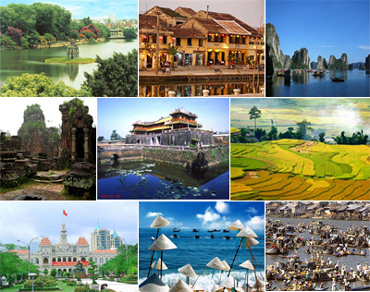
20130410092532-news-s1147.jpg
A senior executive of Trong Diem Trade and Tourism Company, which were present at the last 10 trade fairs in Berlin (ITB) has attributed this to the unprofessional and unmethodical advertisement campaigns carried out by Vietnam.
The number of German tourists to Vietnam in the first three months of the year dropped dramatically by 51.7 percent in comparison with the same period of 2012, even though Germany has been one of the key markets, where Vietnam regularly runs tourism promotion campaigns. Especially, the Germany – Vietnam direct flights allow travelers to take trips in a convenient and time-saving way.
The above senior executive said the ITB’s organization board offered free admissionto local people on the two last days of the trade fair, which attracted a very high number of visitors.
While it was very crowded and noisy at the other stalls, the Vietnamese stall was so quiet because many directors of travel firms left for Vietnam on the last two days.
The director of a travel firm that left before the closing ceremony said that he came there just to meet foreign partners, and he did this on the first days of the trade fair already. He did not think he needed to stay there for some more days, because Vietnam did not organize any special events to attract individual tourists.
Another director complained about the irresponsible preparation of the Vietnamese agencies for the trade fair. ITB opened on March 5, but travel firms were gathered just some days in advance, which forced them to make preparations in a hurry. Especially, the stall’s layout of the Vietnamese stall shown to travel firms was quite different from the one used at the trade fair.
Where to spend money on?
Vietnam, a poor country, once accepted to pay $300,000 to advertise Vietnam’s tourism on CNN in 2007, and $400,000 to post ad pieces on BBC, CNN, and on 27 taxis in London in July 2009. However, no one can say for sure about the effectiveness of the ad campaigns.
In 2012, the Ministry of Culture, Sports and Tourism, once again, intended to spend big money to post ad pieces on 32 buses in Australia for one month. Travel firms then immediately criticized the plan, saying they could not understand what the ministry strived for when running the program.
A report by Nielsen, a market survey firm, showed that more and more tourists access Internet to seek tourism information. About 61 percent of tourists nowadays seek information about the destination points before or when they begin the trips, while 48 percent discuss about trips on online forums. The advertisement on TVand radio ranks nearly at the bottom of the list of the main channels tourists use to seek information.
Director of the Malaysian Tourism Promotion Agency–Victor Wee, has advised Vietnam not to scatter money everywhere, but focus on some key programs to attract tourists.
He himself admitted that he doesn’t like watching TV. Malaysia once relied too much on TV ads, while did not make appropriate attention to Internet, which turns out to be a very effective and cheap advertisement channel

Monday, October 13, 2008

A quiet performer

Duc Hanh chats to Tran Le Van, who starred in the film When the 10th month comes, recently declared one of the best Asian films ever made by CNN.

Le Van is best known for her role as Duyen in the acclaimed film Bao gio cho den thang muoi (When the 10th month comes)When I first saw the film Bao gio cho den thang Muoi (When the 10th month comes) I was just 10 years old. I have watched the film at least once or twice a year since then and every time I see it I am captivated by the beautiful Duyen, a slender girl with long, black hair, a symbol of Vietnamese feminine beauty at the time. Rewatching the film always reminds me of a time when there was no foreign films broadcast in Vietnam. Nowadays Vietnamese films have to compete against Chinese Kung fu films, South Korean dramas and Hollywood blockbusters. Today the actress who played Duyen, Le Van, lives in a quiet neighbourhood of Hanoi with her Dutch husband and their two young boys. When I arrive at her house she is reading 10-year old Avi a story and like a true fan I’m struck dumb by her beauty. But there’s no glitz and glamour to this film star. Le Van is a down to earth woman who has been happily living the quiet life after giving up acting over 10 years ago. Le Van took to the camera like a child to the manor born. Both her parents were stage and film actors. Her younger sister is also an actress and a ballerina. At the age of 10, Le Van was sent to a boarding school for dance. After graduating seven years later, she joined the National Dance Theatre in Hanoi. But the exciting world of celluloid also appealed to her at that time. She starred in films such as Chi Dau (Big sister Dau), Dang thi Hue (Imperial concubine) and Dem hoi long Tri (Dragon Pool Gala) as well as When the 10th month comes, which she made when she was 24 years old. Now 24 years later, the film is the talk of the town again after the American news agency CNN declared it to be of the best 18 Asian films of all time. “I was moved to tears when I heard from my father’s friend and neighbour about the film being honoured by CNN,” says Le Van. “I remember at the time I was making the film. I was cast as the main character in Spartacus, the ballet, and practicing with Russian choreographers,” she continues. “I had to act in the film from noon until midnight then I had to wake up at five in the morning and go to the theatre to training from nine until noon. I had this schedule for three months! “I never understood why I could stand that pressure without feeling drowsy or tired,” she adds. “Perhaps my endurance came from all the hard work I had done to train for the ballet. “The writer and director Dang Nhat Minh also had confidence in my acting. He always let me explore my feelings and creativity even though I was just an amateur. I think his patience and respect encouraged me a lot. I lived the life of my character. Even in some scenes, I forgot myself and thought that I was Duyen.” The film never fails to move me to tears. Especially when Duyen’s father-in-law is dying and Duyen is choking up with emotion. “For that scene there was no dialogue in the script. Minh asked me to express what I had felt or experienced from the agony of heart-break,” explains Le Van. “At first I did not know how to express this but I tried to put myself in the mind of Duyen and I acted with my most instinctive and intense feelings. I think the truer to life art is the more valuable it will be. After the shot, I remember everyone around me was left teary eyed.” Even now, just talking about the scene, Le Van’s eyes are watering. It is just one of those classic scenes that will cut to the core of you, no matter who you are, where you come from. Le Van’s brother-in-law, who recently visited Vietnam, promised to try and screen the film back in the Netherlands to reach a wider audience. Now that the film has received this huge honour from CNN, hopefully it will enjoy a second lease of life. About the film
When the Tenth Month Comes or (Bao gio cho den thang muoi) in Vietnamese was produced in 1984 by the writer and director Dang Nhat Minh. The film, released internationally under the name The Love Doesn’t Come Back, is a haunting portrait of one woman’s struggle with loss and personal sacrifice during the war. The 90-minute feature has won awards at the 1985 Hawaii International Film Festival and at the 1989 Asia Pacific Film Festival and was most recently declared to be one of the best 18 Asian films ever made by CNN. It is a lyrical vision of the endurance of Vietnamese women from one of Vietnam’s most renowned directors. The film’s main character is Duyen, a beautiful young mother whose efforts to shoulder the burden of her husband’s death alone lead to unforeseen complications. Her responsibility to keep the news from her ailing father-in-law forces her to recruit the local schoolteacher Khang into her plans, which involves forging letters from her husband. Duyen and Khang then find themselves drawing closer together. The film’s title refers to the month in which the Day of Forgiveness occurs – a time when it is said that departed souls can visit their counterparts on earth. It is then when the wandering souls return to comfort the living, and Duyen searches the temple grounds nightly to try to find her husband’s ghost. The outcome of the film blends an overwhelming desire to remain human and promote kindness during the tragedies of war. Dang Nhat Minh captures the essence of the Vietnamese soul, people’s love of their family, their sense of responsibility and willingness to sacrifice as well as the warmth of the common people.
(Source: Timeout)

Saturday, August 2, 2008

Vietnam Tourism in lack of advertisement and marketing for development

Nhan Dan- Vietnam is now known as an attractive and safe destination in the region and is considered to have great potential for more development. However, the sector’s activities is still inefficient. This is due to the lack of professional marketing and advertisement.
Vietnam has not yet to set up a national tourism trademark. Even the current slogan “Vietnam-The Hidden Charm" is not powerful enough to attract visitors. Professor, Doctor L K Jago, director of the research centre of tourism and hotel of the Victoria University in Australia held that such a slogan is not clear and transparent so it would fail to attract international visitors. He took the example of other countries with more attractive slogan such as "Malaysia - Truly Asia" , "Uniquely Singapore" or "Incredible India".
Ms Ton Nu Thi Ninh, former vice chairwoman of the National Assembly’s Committee for External Affairs, shared the same view with Doctor Jago “the current slogan of tourism sector is not a clear message and doesn’t feature Vietnamese characteristics.
Images using for advertising the land and people of Vietnam is not impressive while souvenirs selling at shops are not unique.
It’s reported that the sector will spend around VND 16 billion (US $ 1milllion) in late months of the year on advertising tourism on international media. This is not the first time the sector has spent such an amount for the advertisement. However, the amount is unable to ensure the efficiency of advertisement.
Last October the image of Vietnam was broadcast on CNN for three months with a 30 second long clip. This cost US $30,000. However, it did not bring a high result as Vietnam’s potential tourists from the Republic of Korea, Japan and China did not see this English channel. While European audiences could not access the information as the it was broadcast on CNN for Asia.
Patrick Gaveau, marketing director of Focus Asia tourism company held that Vietnam tourism is still week in advertisement. “Strengthening image abroad is an active movement to attract international guests,” he said.
In the coming time, Vietnam will host many international events such as the ASEAN tourism forum 2009. This will be a good chance to advertise Vietnam image to international friends.