Monday, November 30, 2009

2010 target per income Vietnam US$2100

The Ministry of Planning and Investment is targeting an average income of US$2,100 per person a year by 2015, nearly double that of the 2010 target.

This was revealed last week at an international conference on the nation’s socio-economic development plans for the 2011-15 period.

Viet Nam’s per capita income has recently risen to $1,200. This is expected to improve further next year, moving the nation from the ranks of developing countries to the group of average income countries.

Over the next five years, the ministry targets an annual GDP growth of 7-8 per cent, along with a reduction of 2 per cent per year in the poverty rate and budget deficit maintained at 5.1 per cent of GDP.

Accordingly, national GDP will reach VND4,170 trillion ($200 billion) by 2015, 18-19 per cent of which will be contributed by agriculture, forestry and aquaculture sectors; 40-41 per cent by industry and construction and 40-41 per cent by the services sector.

Inflation of 2015 will be kept under a safe threshold, and labour productivity will increase 1.5 per cent over 2010.

Deputy Minister of Planning and Investment Cao Viet Sinh said over the next five years, Viet Nam will focus on developing human resources, building infrastructure, and implementing administrative reforms towards making a major breakthrough in socio-economic development.

VietNamNet/Viet Nam News

Saturday, November 28, 2009

On the Brink: Only 80 Wild Elephants Remain in Vietnam : EcoWorldly

Only 80 wild elephants are left in Vietnam, according to Vietnam’s state-run newspaper, Lao Dong. Experts at the Vietnam Forest Management Agency workshop, held earlier this week, reported the elephant population in Vietnam is in rapid decline. .

In 1975, the Ministry of Agriculture and Rural Development estimated that up to 2,000 wild elephants were left in Vietnam. In 1992, the Vietnam elephant population dropped to between 400 and 600. Today, it is estimated only 80 elephants remain in the wild. The decline is being blamed on illegal wildlife trade, poaching and deforestation.

Sadly, poaching for ivory and bones is reportedly on the increase. And the increased demand for illegal ivory drives the price of the ivory up. While Vietnam banned the trade of ivory in the 1990s, a loophole allows stores to sell ivory left in inventory.

Over the years, human conflict, population and economic growth have all contributed to the decline in the elephant’s natural habitat. As its habitat shrinks, the elephants have reportedly become more aggressive. Several incidents of elephants charging villagers and destroying homes and crops have been reported. Elephants have been driven away or killed as a result of human-elephant conflicts.

Asian elephant photo Julie Langford

Friday, November 27, 2009

Vietnam's Devaluation Alarms Rival Exporters

Vietnam's Devaluation Alarms Rival Exporters - WSJ.com: "Vietnam's decision to devalue its currency raises tensions across Asia as the region's export-driven economies jostle for an edge amid a slow recovery in orders from the U.S. and Europe.

Vietnam shaved 5% off the value of its currency, the dong, on Wednesday, its third devaluation since June 2008. It also increased interest rates by one percentage point, to 8%. The moves were driven primarily by domestic concerns, including a need to combat speculative pressure that has weighed on Vietnam's economy for more than a year.

View Full Image
vietnam
Agence France-Presse/Getty Images

A factory worker in the northern Vietnamese province of Vinh Phuc helps assemble a motor scooter. Vietnam's currency devaluation this week gives it an edge over other Asian exporters.
vietnam
vietnam

The devaluation makes Vietnam's manufactured goods cheaper than those of many other Asian countries, improving its relative position in global trade. That puts Vietnam in the same camp as China, another country that has kept its currency weak compared with its neighbors, sparking complaints from manufacturers and leaders in the region who want China to let its currency, the yuan, rise.

Thai Finance Minister Korn Chatikavanij, whose country has spent at least $15 billion this year to slow the appreciation of its currency and keep it competitive with the yuan, said in a phone interview Wednesday that Thailand could see some 'marginal impact' in low-margin export industries such as textiles after Vietnam's devaluation, but that he was hopeful the broader Thai economy wouldn't be buffeted too much.

Industry leaders, however, are worried. 'The Thai baht is rising too quickly in comparison with some of our competitors, and we in the private sector are telling the government that it is rising too quickly -- but it seems they aren't doing anything,' said Thamrong Tritiprasert, chairman of the footwear section of the Federation of Thai Industries, a trade association.
[vietnam currency]

He said it wasn't just Thailand's shoe industry that would suffer because of Vietnam's devaluation, but potentially all industries. The two countries compete for markets for agricultural products such as rice.

Economists say Vietnam's move is unlikely to trigger copycat devaluations elsewhere. Vietnam's economy is relatively small, and most Asian countries are more concerned with currency policies in China -- a much bigger rival than Vietnam.

But Vietnam's actions matter a great deal in some industries, including textiles and agriculture, and could accelerate a longer-term shift of manufacturing to the country, which already has the advantage of a large and low-cost labor force. Vietnam's exports grew faster in percentage terms than other Asian economies' in recent years, and the country attracted more foreign direct investment in 2007 than its much-larger rival Thailand. It is among the world's top exporters of rice, coffee and shrimp.

Vietnam has economic problems, though, many of which contributed to the decision to devalue. In sharp contrast to many other emerging markets, whose currencies have gained value against the dollar this year, Vietnam continues to face severe downward pressure on its currency, in part because it is one of Asia's only economies with both a fiscal budget deficit and a current-account deficit.

Vietnam's problems stem from years of rapid expansion from 2000 to 2007, when gross domestic product grew an average of 7.5% a year, making the country a darling of global investors. Policy makers were unable to manage the massive inflows of capital, and inflation began, reaching a peak of 28% in August 2008 and threatening an economic crisis.

The global credit crunch helped to ease inflation by depressing oil and food prices. But it also knocked out much of the foreign direct investment on which Vietnam had come to depend, and exports slumped. The trade deficit ballooned, reaching $10.2 billion in the first 11 months of the year, while dollar sales aimed at stabilizing the dong shrunk foreign reserves. All that -- coupled with billions of dollars in spending on economic stimulus -- added to the pressure on the dong.
video
Vietnam's Currency Moves
3:01

A decision to devalue the dong against the dollar and a hike in interest rates point to strains on Vietnam's economy. Hong Kong bureau chief Peter Stein and Asian economics reporter Alex Frangos discuss what prompted the actions.

Wednesday's devaluation, in which the central bank lowered the midpoint of the dong's daily trading range 5.16%, was an attempt to help stabilize the situation. The accompanying one-percentage-point rise in interest rates, in effect Dec. 1, was designed to make sure there will be no further depreciation.

'This time our solution is to strongly intervene,' State Bank of Vietnam Governor Nguyen Van Giau said.

Many economists say they are skeptical that will be enough to halt the downward pressure on the dong. 'The authorities are buying themselves some time with this move,' says Tim Condon, head of Asian research at ING in Singapore. But Vietnam needs the global recovery to pick up steam to boost exports and reduce the country's trade and balance-of-payments deficits before the situation can be remedied, he and others say.

Growth is still relatively strong in Vietnam, though, and the lower currency values could give a further shot to exporters. The World Bank expects Vietnam's GDP to climb 5.5% this year, compared with 6.2% in 2008."

Vietnam Auto industry could splutter and die

"Vietnam auto industry could splutter and die

Visitors at the fifth Vietnam Motorshow in Ho Chi Minh City last week.
Vietnam’s regional and global tax-cut commitments could mean the death of local car makers within the next ten years if there are be no improvements to the industry’s development strategy, a trade official said.

That scenario would also include an ballooning trade deficit caused by the flood of imported cars, said Ngo Van Tru, deputy director of the Heavy Industry Department at the Ministry of Industry and Trade.

Under the country’s free trade deal with the regional grouping ASEAN, car import taxes will drop to between 0 and 5 percent by 2018 from the current 83 percent. Meanwhile, the World Trade Organization commitments will make taxes on cars from the regional bloc’s members go down to 70 percent in 2014 and 47 percent in 2017.

The lower taxes would bring competitive advantages to imports in term of prices, Tru said. Even now, locally-made cars are much more expensive than their equivalents produced in other economies, he noted.

Tru estimated that the country would import US$20 billion worth of cars"

more info--->>>>Vietnam latest news - Thanh Nien Daily

Hard Rock Cafe hits Vietnam

Hard Rock Café hits Vietnam


Vietnam’s first Hard Rock Café will open in downtown Ho Chi Minh City next month, according to a recent press release.

The café at Kumho Asiana Plaza, 39 Le Duan Boulevard in District 1, will be run by Viet Thai International, well known in Vietnam as the owner of Highlands Coffee. Viet Thai plans to open a total of four Hard Rock Cafés in Vietnam.

Hard Rock Cafés traditionally offer standard American café fare, like burgers and fries, alongside a soundtrack of all hard-rock tunes. The cafés also host live concerts and sell collectibles and music-related merchandise that adorn the walls.

The first Hard Rock Café was founded by Americans Isaac Tigrett and Peter Morton in 1971 in London. Currently, the 127 Hard Rock cafés, some 12 hotels and casinos operate in more than 52 nations and territories

Tuesday, November 24, 2009

Hewlett-Packard extends music service to Southeast Asia

SINGAPORE - Hewlett-Packard (HP) is entering Southeast Asia's music download market through an expanded partnership with Universal Music.

The free service, which will be available in 18 countries across South and Southeast Asia from 28 November, gives HP customers access to Universal’s music library. The service allows 1,120 songs to be downloaded during a 12-month period, 120 of which can be downloaded for indefinite ownership. The rest will be available with a validity of one year.

The service will specifically be available in Bangladesh, Bhutan, Brunei, Cambodia, Hong Kong, India, Indonesia, Laos, Malaysia, Maldives, Nepal, Pakistan, Philippines, Singapore, South Korea, Sri Lanka, Taiwan and Thailand.

According to the company, this is the first music-service partnership between Universal Music and HP in Southeast Asia. “Consumers are increasingly streaming and storing their favourite music files on their PC,” said Dennis Mark, VP of marketing for HP Personal Systems Group for Asia-Pacific and Japan. “Our partnership with Universal Music will amplify consumers’ entertainment gratification and make their notebook a one-stop shop for all their multimedia needs.”

HP’s expansion into the sector mirrors similar services launched in the region to attract young consumers. This year, Nokia rolled out its
Comes With Music platform in the region. Motorola’s MotoMusic, which enjoyed success in China after its 2006 debut but was slower to gain ground elsewhere in the region, also launched in Singapore last year. That service closed down in June.

HP initially launched this service in other Asia-Pacific markets last month.

Ancol to perform in Thailand and Vietnam | The Jakarta Post

Nani Afrida , The Jakarta Post , Jakarta | Tue, 11/24/2009 4:35 PM | Business

Jakarta-owned developer and recreation operator PT Pembangunan Jaya Ancol will expand its business to overseas markets by performing dolphin shows in three countries—Vietnam, China and Thailand, starting next year.

The company president director, Budi Karya Sumadi, said that Vietnam would be the first country to be visited, which would cost Rp 10 billion (US$ 950,000) in investment.

“We will work together with Soui Tien Park in Ho Chi Minh, Vietnam. So, the budget would be smaller,” Budi Karya told reporters and investors during the company public expose in Jakarta on Tuesday.

According to Budi Karya, Ancol would spend about Rp 20 billion to perform dolphin shows in those countries.

“The shows overseas are part of our plans to boost our revenue next year. We also have several other programs in the city amusement park,” he said.

New Exotissimo Vietnam Tours Offer Genuine Cultural Experiences with Local Connoisseurs in Hanoi and Saigon

Exotissimo unveils two new Vietnam Tour programs in Ho Chi Minh City and Hanoi, featuring cross-cultural exchanges and experiential excursions.

Bangkok, Thailand (PRWEB) November 24, 2009 -- Leading destination management company Exotissimo Travel has launched two innovative tours in Ho Chi Minh City and Hanoi, drawing extensively on the company's insider knowledge and excellent contacts that come with 16 years of operation in Vietnam.

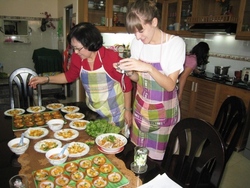
Cooking class at a Saigonese family in Vietnam

"As a long-time resident of Vietnam, the incredible cultural diversity of this country never fails to amaze me. We strive to show travelers the lesser known aspects of Vietnam we know so well, but which few tourists would be able to gain access to," said Maeve Nolan, Product Manager of Exotissimo Travel Vietnam.

Specially designed for culture lovers, Exotissimo's 5-day Cultural Hanoi tour focuses on the artistic richness and ancient heritage of Vietnam. This tour goes beyond normal sightseeing to bring travelers to meet Hanoi natives, including a meal with a culinary connoisseur in the heart of the Old Quarters and dining with a local nobility in his ancestral home to hear a personal account of Vietnamese history.

In this Cultural Hanoi tour, participants also get to learn Tai Chi with a renowned martial arts master and receive a traditional diagnosis by a Vietnamese medicine expert. This program introduces travelers to Vietnam's performing arts traditions with either a show of classical opera, chamber music or water puppetry. To show travelers the ancient way of Vietnamese life, the tour features excursions to the fertile farmlands and artisan villages of the Red River Delta.

To view the detailed itinerary, visit Cultural Hanoi Tour.

Another new Vietnam tour of Exotissimo, Unseen Ho Chi Minh City, captures the timeless beauty and traditional charms of Ho Chi Minh City, also known as Saigon to the locals. This 4-day program is filled with opportunities to afford travelers insights into the undiscovered side of Ho Chi Minh City, a pulsating city at the crossroads of traditions and modernity.

To truly immerse travelers in the local way of life, Unseen Ho Chi Minh City includes a hands-on cooking class at a Saigonese family's house and a chauffeured ride on a Vespa scooter through the city's iconic mass of motorcycles. A stroll through the bustling Chinatown and a visit to a traditional medicinal museum highlight the uniqueness of this southern Vietnamese city.

To view the detailed itinerary, visit Unseen Ho Chi Minh City Tour.

For other touring ideas in Vietnam, visit Vietnam Tours Collection

Exotissimo Travel is a premier destination management company that specializes in tailor made tours in Vietnam, Thailand, Cambodia, Laos and Myanmar. To view in full what the company can offer, visit Exotissimo Travel Website.

About Exotissimo Travel
Exotissimo Travel is a premier destination management company that specializes in tailor made tours in Vietnam, Thailand, Cambodia, Laos and Myanmar. Established in 1993, the company is now a network of 16 locally-based offices staffing over 500 travel professionals, with sales offices in San Francisco, Paris, Berlin, Barcelona and Melbourne. For more information, please visit Exotissimo Travel Website.

Total finds oil in Vietnam

COURBEVOIE, France, Nov. 23 (UPI) -- French supermajor Total announced a new discovery of light crude oil off the coast of Vung Tau

in the south of Vietnam in the Mekong delta region.

Total, through its Total E&P Vietnam subsidiary, announced it discovered oil in its Lac Da Nau offshore prospect in block 15-1/05. The prospect is located more than 65 miles east of Vung Tau and about 40 miles off the coast.

The well is the first exploration well drilled and the first discovery in the block. Test flow rates reached 4,200 barrels of light crude oil per day.

Vietnam holds more than 500 million barrels of proven oil reserves, most of which is located in offshore fields.

Total lists its share of production in the region at around 246,000 barrels of oil equivalent per day in 2008.

Sunday, November 22, 2009

Vietnam Airlines to launch twice-daily flights to Bangkok | Look At Vietnam


LookAtVietnam - National carrier Vietnam Airlines said its daily Ho Chi Minh City-Bangkok service will become twice daily starting December 1 as the carrier plans for more passengers from Thailand next year.

Do Khoi Nguyen, Vietnam Airlines representative in Bangkok, told Thanh Nien that the new schedule, with one flight in the morning and the other in late afternoon, would be good for the tourist market.

The airline wants to prepare for more Thai tourists next year, when Vietnam celebrates Hanoi’s 1,000th anniversary and the 2010 Hue Festival, he said.

Thailand is one of Vietnam’s key tourism markets. According to the Vietnam National Tourism Administration, more than 125,118 Thai tourists visited the country in the first ten months this year, down 18.8 percent from the same period last year.

The new service is part of a plan implemented in late October to provide more flights on key international and domestic routes. The carrier’s passenger numbers this year are expected to increase 4 percent to 9 million.

VietNamNet/Thanh Nien

Vietnam needs 300 years to be free from unexploded bombs, mines | Look At Vietnam

International and domestic delegates gathered on November 19 in Quang Tri to find ways of minimising accidents caused by post-war bombs and landmines in central provinces.


LookAtVietnam - International and domestic delegates gathered on November 19 in central Quang Tri Province to find ways of minimising accidents caused by post-war bombs and landmines and boosting clearance activities in central provinces.

Speaking at the seminar, Deputy Minister of Labours, Invalid and Social Affairs (MoLISA) Bui Hong Linh said bombs and landmines were a continual threat to people’s lives, contaminating water sources and causing deaths or serious injuries to those who live in contaminated areas.

“Most victims are young men who used to be the main family bread-winners, but have now become a burden of their families, so more action plans are needed to be implemented to assure people’s safety,” Linh said.

Viet Nam Bomb and Mine Clearance Action Centre director Nguyen Trong Canh said Viet Nam had spent hundreds of millions of dong for its activities; however, the number of unexploded UXO remained huge and the clear-up requires large amounts of time and effort.

more info--->>>>Vietnam needs 300 years to be free from unexploded bombs, mines | Look At Vietnam

Saturday, November 21, 2009

Vietnam tourism advertised on French TV

A film crew from France’s TV5 channel has shot the Vit Co Xanh ecological village in northern Hoa Binh province and Sao Bien yacht in Ha Long Bay, Quang Ninh province.

This film will be broadcasted on TV5’s Tourism Discover programme, which introduces unique tourist sites to the French-speaking community. The film will be on TV5 Quebec (Canada) in January 2010 and on global TV5 Monde in March 2010.

In Vietnam, apart from shooting the world natural heritage site at Ha Long Bay, the French film crew paid special attention to the community tourism model, with Vit Co Xanh ecological tourist site as the example.

French film makers came to Vietnam under the sponsorship of Vietnamese travel company, Vietnam Adventure.

France is a key market for the Vietnamese tourism industry. Around 300,000 French visitors come to Vietnam annually to discover culture, history and ecological tourism.

VietNamNet/TTXVN

Tuesday, November 17, 2009

Online artists revolutionizing Vietnam pop

nd turning instead to internet releases.
Ung Hoang Phuc.

The success of “online singers” Bao Thy, Thuy Chi, MR Siro, Akira Phan, Noo Phuoc Thinh and MU4 is ensuring people sit up and take notice and are finally taking the phenomenon seriously. Even established artists are now seeing it as a way to grow their careers cost effectively.

Young fans are long accustomed to surfing for pop trivia and tour dates now they are also turning to the net in order to download their favorite songs. Uploading new songs on the internet is a perfect choice of young singers to advertise their products and names.

The average cost for an album is several hundreds of million dongs. Meanwhile, it costs nothing for singers to upload their songs online. They only need to choose a prestigious website to post their songs.

Singer Khong Tu Quynh spent a lot of money advertise her first album “Strawberry Story”. Now she has decided to introduce her second album “Try to Up” on social network Zingmp3.

Khong Tu Quynh

A former member of AXN band, Nguyen Nhat Trung, is advertising his latest songs on the album Top Download Series 1 online.

Pop star Ung Hoang Phuc also decided to deliver his new album on Zingmp3, like Khong Tu Quynh.

Delivering online albums has become smart move for young singers when the chances or making it big can be slim. Online albums still offer the chance of making it big but without the massive outlay.

Now social network and music websites are launching online contests to seek talented online singers like “Online golden micro” of Hoa Hoc Tro newspaper, K4T by Zing website and Coca Cola or the online music contest for Vietnamese students held by FPT and the Youth Union.

VietNamNet/Tuoi Tre

Monday, November 16, 2009

Hanoi supermarkets win on “Golden Sale Promotion Day” | Look At Vietnam

LookAtVietnam – Supermarkets in Hanoi witnessed a chaotic day on November 15, when Hanoians flocked there to purchase goods on a promotional day.


At Big C, 2,000 customers reportedly waited in front of the supermarket before 8 am. The road outside the supermarket was a constant traffic jam and the motorbike parking area stayed full. VnExpress reporters noted that they could see many cars with strange plate numbers from other provinces.

Inside the supermarket, there were so many visitors that the escalator stopped working because of overloading. Visitors had to move step by step at stalls.

Kim Hanh, a housewife from Ha Dong, left home at 9 am, but she could not reach the second floor of the supermarket until 11 am because of traffic. Hanh still could not shop at 11 am because of too many other customers. She and her son left for lunch and returned in the afternoon, when many visitors had left already.

The same situation could be seen at many other supermarkets. Pico Plaza was full of visitors from 7:30am onward.

The “Golden Sale Promotion Day” on November 15 was the focus of a promotional month initiated by Hanoi City, under which customers have been promised to enjoy 30-50 percent price reductions at big supermarkets like Metro, Viet Long, Fivimart, Big C and Nguyen Kim Shopping Centre.

In November 2009 as a whole, customers can purchase goods with discounts of 15-50 percent at nearly 1,000 sale points across the city.

Ngo Thanh Dat, Head of the Marketing Division for Pico Plaza, said that Pico had to use all officers it had to serve clients while the supermarket was overcrowded.

The promotion really helped heat up November, because people delayed purchases until the “golden day,” so as to enjoy the hefty discount rates of 30-50 percent.

At supermarkets, discounts have been offered for a wide range of products, including food, drink, consumer goods, apparel, footwear and electronics. Electronics like digital cameras have discounts of up to 50 percent.

Dat said that digital cameras, washing machines and LCD TVs are the best sellers. He said that the sales of LCD TVs were five times more than on an ordinary day. Pico had sales of 12 billion dong just from yesterday morning.

“The number of visitors was four times bigger than normal,” Dat said, adding that a lot of visitors had to park motorbikes outside the supermarket, because its parking capacity of 3,000-4,000 motorbikes was not enough.

Big C’s Deputy Director Nguyen Thai Dung said that the number of visitors was twice as on previous weekends and triple ordinary days.

In general, supermarkets expects to sell 150 billion dong worth of goods during the promotion month, double previous months. On November 15, the price discounts of 30-50 percent were offered for 20 percent of displayed goods.

VietNamNet/VNE

Sunday, November 15, 2009

Obama Lays Out America’s Asia-Pacific Agenda

WASHINGTON, Nov. 14, 2009 – The United States is a Pacific nation, and America wants to strengthen alliances and understandings in the region, President Barack Obama said in Tokyo today.

Obama gave a major policy speech at Suntory Hall to 1,500 Japanese leaders. He met with Prime Minister Yukio Hatoyama and with the emperor and empress of Japan.

The president praised the U.S-Japanese alliance as a partnership based on mutual interests and respect. The alliance has served both nations well in the past, and he expects it will change and deepen in the future, he said.

The United States pledged to defend Japan when a treaty was signed almost 50 years ago. Security is part of the overall relationship between the nations, and the two leaders agreed to move expeditiously through a joint working group to implement the security agreement on restructuring U.S. forces in Okinawa, Obama said.

While Japan is the anchor of American interests and commitments in the Pacific, “it doesn't end here,” the president said.

“Asia and the United States are not separated by this great ocean; we are bound by it,” he said. “We are bound by our past – by the Asian immigrants who helped build America, and the generations of Americans in uniform who served and sacrificed to keep this region secure and free.”

Prosperity binds the regions together, the president said, and he noted that millions of Americans trace their ancestry to Asia. “So I want everyone to know, and I want everybody in America to know, that we have a stake in the future of this region, because what happens here has a direct effect on our lives at home,” Obama said.

Japan and China are two of America’s largest trading partners, and the nations of Southeast Asia – especially Indonesia, Vietnam, Thailand, Malaysia and Singapore – are growing in importance to the American economy.

But the United States is interested in the region not only for economics, Obama said, but also for security.

“This is a place where the risk of a nuclear arms race threatens the security of the wider world, and where extremists who defile a great religion plan attacks on both our continents,” he said.

Obama said the United States will engage with old friends and seek new ones throughout the region. Alliances with Japan, South Korea, Australia, Thailand and the Philippines “continue to provide the bedrock of security and stability that has allowed the nations and peoples of this region to pursue opportunity and prosperity that was unimaginable at the time of my first childhood visit to Japan,” he said.

“And even as American troops are engaged in two wars around the world,” he added, “our commitment to Japan’s security and to Asia’s security is unshakeable, and it can be seen in our deployments throughout the region – above all, through our young men and women in uniform, of whom I am so proud.”

The United States looks for nations such as Indonesia and Malaysia to play larger roles regionally, he said, and he stressed that the national security and economic growth of one country need not come at the expense of another.

“I know there are many who question how the United States perceives China’s emergence,” he said. “But as I have said, in an interconnected world, power does not need to be a zero-sum game, and nations need not fear the success of another. Cultivating spheres of cooperation – not competing spheres of influence – will lead to progress in the Asia-Pacific [region].”

This does not mean that China has a blank check, the president noted.

“America will approach China with a focus on our interests,” he said. “It's precisely for this reason that it is important to pursue pragmatic cooperation with China on issues of mutual concern, because no one nation can meet the challenges of the 21st century alone, and the United States and China will both be better off when we are able to meet them together.”

America welcomes China’s effort to play a greater role on the world stage – a role in which their growing economy is joined by growing responsibility, he said.

“China’s partnership has proved critical in our effort to jumpstart economic recovery,” the president said. “China has promoted security and stability in Afghanistan and Pakistan. And it is now committed to the global nonproliferation regime, and supporting the pursuit of denuclearization of the Korean peninsula.”

The United States does not seek to contain China, nor does a deeper relationship with China mean a weakening of American bilateral alliances in the region, Obama said.

“On the contrary, the rise of a strong, prosperous China can be a source of strength for the community of nations,” he said. “So in Beijing and beyond, we will work to deepen our strategic and economic dialogue, and improve communication between our militaries.

“Of course, we will not agree on every issue,” he continued, “and the United States will never waver in speaking up for the fundamental values that we hold dear – and that includes respect for the religion and cultures of all people – because support for human rights and human dignity is ingrained in America. But we can move these discussions forward in a spirit of partnership, rather than rancor.”

The president said he also believes multilateral organizations can advance the security and prosperity of the Asia Pacific.

“I know that the United States has been disengaged from many of these organizations in recent years,” he acknowledged. “So let me be clear: Those days have passed. As an Asia-Pacific nation, the United States expects to be involved in the discussions that shape the future of this region, and to participate fully in appropriate organizations as they are established and evolve.”

The security of the 21st century in the area, the president said, is threatened by a legacy of the 20th century: the danger posed by nuclear weapons.

“In Prague, I affirmed America’s commitment to rid the world of nuclear weapons, and laid out a comprehensive agenda to pursue this goal,” he said. “I am pleased that Japan has joined us in this effort, for no two nations on Earth know better what these weapons can do, and together we must seek a future without them. This is fundamental to our common security, and this is a great test of our common humanity. Our very future hangs in the balance.”

But as long as nuclear weapons exist, Obama added, “the United States will maintain a strong and effective nuclear deterrent that guarantees the defense of our allies – including South Korea and Japan.”

Still, he said, an escalating nuclear arms race in the region would undermine decades of growth and prosperity. “So we are called upon to uphold the basic bargain of the Nuclear Non-Proliferation Treaty – that all nations have a right to peaceful nuclear energy; that nations with nuclear weapons have a responsibility to move toward nuclear disarmament and those without nuclear weapons have a responsibility to forsake them,” he said.

The United States is pursuing a new agreement with Russia to reduce nuclear stockpiles and also is working to ratify and bring into force a nuclear test ban treaty. “And next year at our Nuclear Security Summit, we will advance our goal of securing all the world’s vulnerable nuclear materials within four years,” Obama said.

Strengthening the global nonproliferation movement is not about singling out individual nations, he said. “It's about all nations living up to their responsibilities,” the president said. “That includes the Islamic Republic of Iran. And it includes North Korea.”

North Korea has chosen a path of confrontation and provocation, Obama said, and is developing nuclear arms and the means to deliver them.

“It should be clear where this path leads,” the president said. “We have tightened sanctions on Pyongyang. We have passed the most sweeping U.N. Security Council resolution to date to restrict their weapons of mass destruction activities. We will not be cowed by threats, and we will continue to send a clear message through our actions, and not just our words: North Korea’s refusal to meet its international obligations will lead only to less security, not more.”

North Korea can renounce these efforts and be welcomed into the community of nations, Obama said.

“Instead of an isolation that has compounded the horrific repression of its own people, North Korea could have a future of international integration,” he said. “Instead of gripping poverty, it could have a future of economic opportunity – where trade and investment and tourism can offer the North Korean people the chance at a better life. And instead of increasing insecurity, it could have a future of greater security and respect. This respect cannot be earned through belligerence. It must be reached by a nation that takes its place in the international community by fully living up to its international obligations.”

He called on North Korea to return to the six-party talks and uphold previous commitments including the Nuclear Non-Proliferation Treaty. He also called for the full and verifiable denuclearization of the Korean peninsula.

The United States will stand with Asian allies in combating the transnational threats of the 21st century: extremism, piracy, disease, poverty and modern-day slavery, the president said. “The final area in which we must work together’” he added, is in upholding the fundamental rights and dignity of all human beings.”

The American agenda in the area is ambitious, and it will not be easy, Obama said. “But at this moment of renewal … history tells us it is possible,” the Hawaiian-born president said. “This is … America's agenda. This is the purpose of our partnership with Japan, and with the nations and peoples of this region. And there must be no doubt: As America's first Pacific president, I promise you that this Pacific nation will strengthen and sustain our leadership in this vitally important part of the world.”

Marriott to open first hotels in Algeria, Morocco

To open first hotels in Algeria, Morocco, Ghana by 2012

* Sees strongest growth opportunities in Asia

* Aiming for about 70 hotels in Middle East, Africa by 2015

By Jason Benham

DUBAI, Nov 11 (Reuters) - Marriott International (MAR.N) will open its first hotels in Algeria, Morocco and sub-Saharan Africa by 2012 and sees further opportunities to grow in Asia as the global economic downturn recedes.

"Asia is in the lead and the Middle East and Africa is right up there with it," Ed Fuller, president and managing director of Marriott Lodging International, one of the hotel operator's five business segments, said at a news conference in Dubai on Wednesday.

The U.S-based company, which aims to have more than 70 hotels in the Middle East and Africa by the end of 2015, will open a hotel in Algeria, Morocco and Ghana, and two more in Egypt.

"We've made several forays but have been unable to break into Africa until this point," Fuller said.

"Africa has great potential."

The company, which operates the Marriott, Ritz-Carlton and Renaissance Hotels, will focus its African expansion on Algeria, Angola, Morocco, Nigeria and South Africa, its chief development officer for the Middle East and North Africa, Jean-Marc Grosfort, told the conference.

Fuller told Reuters that while he believed the worst of the financial crisis was over, it was "premature" to say that hotel bookings in the Middle East were picking up.

In October, Marriott said its worldwide revenue per available room (revPAR) for the third quarter fell 23.5 percent, and it could be flat to down 5 percent for hotels worldwide in 2010.

RevPAR is a benchmark measure for the hotel industry.

Many hotels have struggled during the global downturn as recession-hit customers reduce spending on travel while businesses also look to cut costs. (Editing by Mike Nesbit)

Thursday, November 12, 2009

US No.1: Blame it on Obama-12 November, 2009

US No.1: Blame it on Obama

Thanks to US President Obama, the US was ranked No. 1 in FutureBrand’s Country Brand Index (CBI) study. The US was also named the world’s fourth best conference destination.

“It’s logical to assume that the shift in the political climate and renewed optimism surrounding the election of President Obama as a key influencer in the US topping the list,” said Rene A. Mack, president of public relations firm Weber Shandwick’s Global Travel & Lifestyle practice, which produced the report.

He added:

“It will be very interesting to see the US's performance next year and understand if this was a halo effect of a new president, or if the country can actually capitalize on this opportunity to better create a strong brand."

Despite America's strong showing in this year's rankings, the US Travel Association said the country's cumbersome security and visa policies are keeping its positive image from translating into positive visitor numbers.

Ranked No. 3 in 2008, the United States beat out second-place Canada and third-place Australia, as well as New Zealand, France, Italy, Japan, the United Kingdom, Germany and Spain — all of which placed in the top 10 of the annual study, which examines how countries are branded and ranked by international travelers.

Wednesday, November 11, 2009

Doctors' strike claims a dozen lives in India

Nearly a dozen patients died in a hospital in the northern Indian state of Bihar because of a strike by local doctors, said hospital officials on Wednesday.

The patients were admitted to the Patna Medical College and Hospital, where junior doctors started a strike Monday night, officials said over phone from Patna, the state capital of Bihar.

The doctors are demanding payment of the increased stipend that was promised to them earlier.

"All the patients died during the first 24 hours of the ongoing strike," an official said.

More than 500 junior doctors went on an indefinite strike late Monday night, demanding payment of the increased stipend they were promised after a round of agitations this August.

The strike has badly hit the emergency services and dozens of surgeries have been postponed.

Hospital authorities have sought the help of the health department to cope with the situation and have asked for 100 doctors from various parts of the state.


Source:Xinhuanet

VIET NAM NET

Pricewaterhouse Coopers forecasts Hanoi and HCM City will rank first and second in the list of the world’s 30 cities with the highest growth rates between 2008 and 2025.

Hanoi today

The annual gross domestic product (GDP) of the two cities will grow at an average seven percent rate during this period, PwC predicted.

Hanoi and HCM City are followed by the Chinese cities of Changchun (3rd) and Guangzhou (4th) in the list, which includes 12 from India, seven others from China and none from developed countries. It clearly indicates that the global balance is tilting toward emerging economies.

PwC’s research results from151 cities in the world show the GDP of the 100 largest cities make up 30 percent of the global total in 2008.

Hanoi and HCM cities are predicted to be among the most prominent cities in the world by 2025. Specifically, HCM City will jump from 95th place in 2008 to 64th place in 2025 while Hanoi will climb from 116th position in 2008 to 82nd position in 2025, according to the report.

PV

Please send us your comments and feedback:

Thursday, November 5, 2009

Why Israel is not a tourism Mecca-04 November, 2009

Despite numerous attractions, Israel’s tourism industry continues each year to draw 2.5 million visitors, many of them Americans. That figure has been the same for the past decade meaning tourism has reached a plateau.

The plateau continues even as advertising budgets have increased and government officials have promoted the country.

Why is that?

“One reason for this is that tourists generally seek peaceful locales. Hence, wars and terror attacks keep tourists wondering whether Israel will be safe at the time of their planned vacation, and many forego the visit,” reports ynetnews.com, an Israeli news service.

Periodic episodes of violence have deterred visitor growth, as cited by ynetnews.

Ami Etgar, CEO of the Israel Incoming Tour Operators Association (IITOA), says that while security issues pose a serious obstacle for the tourism industry, other factors also make it difficult for large groups to visit Israel. He said:

"In Israel there are almost no international hotel chains because entrepreneurs from abroad don't like to invest. (here)”

Etgar says that a longer history of peace is needed to attract investors. "But mostly (entrepreneurs) need help in removing bureaucratic barriers," he said.

Another obstacle for incoming tourism are rules and regulations set up by the Interior Ministry, observers say.

Asia's Best Coffee - Vietnam

There's no such thing as a quick cup of coffee in Vietnam, where communing with friends over a glass or two is a social ritual on par with the handshake in the West.

"It's all about the conversation, chewing the fat, watching the world go by," says Mark Lowerson, an Australian English-language-class coordinator and culinary-tour guide who has lived in Hanoi for seven years. "We (Westerners) can be at one with our coffee whereas Vietnamese will enjoy it much more among friends."

Coffee -- along with baguettes and crème caramel -- is a culinary holdover of French colonial rule (French-administered Indochina was established in 1887 and dissolved in 1954), when coffee plants were introduced to Vietnam's central highlands by French missionaries. Production dropped off during the Vietnam War but resumed in the 1980s; today Vietnam, which grows primarily robusta but also arabica and small amounts of lesser-known varieties, is one of the world's largest producers.

Usually brewed into a glass at the table using excruciatingly slow single-cup drip filters called ca phe phin, Vietnamese coffee is mixed with sugar and sweetened condensed milk and poured over ice; the resulting concoction is called ca phe sua da (if you prefer yours hot, ask for ca phe sua nong; in Vietnam even black coffee is usually drunk with sugar). It's a burly but smooth brew with a hint of chocolate, a flavor that comes from roasting beans with "butter oil" (clarified butter, margarine or vegetable oil) and sometimes sugar, as well as with other ingredients whose identities are closely guarded by roasters (fish sauce is rumored to be one).

In Vietnam, tea is for drinking at home, while coffee is for enjoying at a cafe. That word may be applied to anything from three tiny plastic stools clustered on the sidewalk in front of a shed to the outlets of upmarket homegrown coffee-shop chains such as Trung Nguyen and Highlands.

Most small operators pride themselves on serving coffee with its own unique flavor, so coffee tasting in Vietnam is a great adventure. "I go to certain cafes for a certain cup because that's the flavor I feel like at the time," says Mr. Lowerson, who likes to find a perch with a good view of Vietnam's frenetic street life.

Though he hesitates to recommend any particular Hanoi cafe, Mr. Lowerson does have some advice for the coffee loving visitor: "Just pull up a stool anywhere, sip the sweetness and watch the passing parade."

Glossary

Ca phe sua da: iced coffee with sweetened condensed milk

Ca phe sua nong: hot coffee with milk

Ca phe da: iced coffee with sugar only

Ca phe nong: hot coffee with sugar only

Where to find a good cup
Publish Post

A good-to-stellar glass of ca phe sua da is literally never more than a block away in Vietnam, though Ho Chi Minh City boasts more three-stool sidewalk "cafes" than the capital city of Hanoi. If you prefer a proper cafe, the Trung Nguyen and Highlands cafes are always a good bet. Both have branches all over Ho Chi Minh City and Hanoi.

Wednesday, November 4, 2009

China approves Shanghai Disneyland -05 November, 2009

LOS ANGELES - Walt Disney has won approval from the central government of China to build a Disneyland-style theme park in Shanghai,

Analysts estimate Shanghai Disneyland — not including hotels and resort infrastructure — will cost US$3.5 billion, making it one of the largest-ever foreign investments in China.

The initial resort, with a mix of shopping areas, hotels and a Magic Kingdom-style theme park, will sprawl across 1,000 acres of the city’s Pudong district.

The theme park will occupy about 100 acres, making it a little bigger than Disneyland in Anaheim, California and on par with the parks in Paris and Tokyo.

It is expected to open in five or six years.

Disney has been talking to China about a Disneyland theme park for almost 20 years amd analysts say approval of the project signals that the Chinese leadership may be more open to Western investment.

| Storm victim toll rises to 65 in Phu Yen - Storm victim toll rises to 65 in Phu Yen

Tropical storm Mirinae, which hit the south-central province of Phu Yen on November 2, killed at least 65 people and left 16 others missing, said local officials.

The mountain district of Dong Xuan reported the largest number of deaths (30) followed by Tuy An district (20), Song Cau town (13), Tuy Hoa City and Tay Hoa district (2 each).

About 145 boats sank, 413 houses collapsed and 5,540 other were damaged, said local officials.

The death toll might keep rising as violent flood waters made it impossible for rescue workers to reach isolated areas.

The province had moved 4,207 families with more than 16,000 residents to safer zones before the storm made landfall. However, many areas in Tuy An district and Song Cau town have remained cut off.


Deputy Prime Minister Hoang Trung Hai on November 4 flew to Phu Yen to direct rescue work in flooded communes. He asked the province to mobilize all rescue forces and distribute food and other necessities to isolated villages as early as possible to ensure no one is left hungry.

He also asked local administrations to provide emergency aid to families that lost their relatives and had their houses damaged during the storm.

In the evening of November 3, National Highway No1A which had been blocked by landslides, was open to traffic again. The provincial People’s Committee deployed 10 buses to transport 1,800 train passengers stranded at local railway stations to Dieu Tri railway station in nearby Binh Dinh province.

Tuesday, November 3, 2009

Lowdown on the naked airline scan-03 November, 2009

With a new x-ray scanner, passengers will not have to remove shoes and belts. No “stick-em-up” hands in the air, either.

Scanners sit in remote locations. It’ll be rolled out by selected US airports over next year.

A Lonely Planet reporter tested the system at Manchester Airport and concluded:
“It’s hard to see much wrong with it.”

He stood in an open-sided metal box with hands on his head for the procedure. Guards at a distance analyze the resulting pictures. But it does open up a passenger’s body to view (at least of the guard).

”But technology sometimes comes at a price and, to some, this may be a step too far, “ says the reporter,” Tom Hall.

“However, anything that gets me through security quicker, allowing more time for browsing geektastic airplane magazines and trying on duty-free sunglasses is a good thing,” Hall concludes.

Monday, November 2, 2009

Safety will be paramount at Vietnam’s first nuclear power plant

he Chairman of the NA’s Science-Technology and Environment Committee said he’s sure Vietnam will have trained personnel needed to run the first nuclear power plants in 2020.

LookAtVietnam - Deputy Dang Vu Minh, Chairman of the National Assembly’s Science-Technology and Environment Committee, told

VNExpress he’s sure Vietnam will have the trained personnel needed to run a reactor safely when the new plants go on-line circa 2020.

Nuclear power and unanswered questions

VNExpress: What are the basic features of the nuclear power project that will be submitted to the National Assembly?

Deputy Dang Vu Minh: It’s planned that our first two nuclear power plants will be built in Phuoc Dinh and Vinh Hai communes in Ninh Phuoc and Ninh Hai districts of Ninh Thuan province beginning in 2015. Each will have a pressurized water reactor able to supply 1000 megawatts to the national grid. The plants will become operational by 2020.


More info---->>>Safety will be paramount at Vietnam’s first nuclear power plant | Look At Vietnam

Children with cancer paint with hope

A special picture, completed by famous painter Tran Nhat Thang and various children suffering from cancer in the Tumor Department of the National Pediatrics Hospital, will be sold at an auction for charity on the occasion of Children’s Cancer Day on November 1.

The 1.2m-wide, 2.4m-long picture, completed on Tuesday, is from one of programmed organized by the Chap Canh Uoc Mo (Making Dreams Come True) Volunteer Group, with the aim of giving children with cancer a chance to express their hopes and dreams.

The children are encouraged to come to the public room in the hospital, where they are provided with colour pencils and paper to draw until their hearts are content.

Five-year-old Anh, from the northern province of Bac Ninh, always arrives early to the room. Like the others, the little girl is being given a water transfusion, but the pain caused by the needle does not prevent her from drawing. Anh, who has been fighting a tumour in her lung for three years, still moves her right hand over the papers while the other is being injected.

“When my daughter was not undergoing treatment, she really liked going to the village’s kindergarten in front of our house to play with the otherchildren. But after being called a ‘bald girl’, she now refuses to go back,” Anh’s father says while his eyes brim with tears.

Another “small artist” of the picture is five-year-old Hien, from Thai Binh Province, who was sent to this hospital just last week. Sitting silently inside her mother’s arms, the girl, with concentration, colours in an image of a parrot in a book for kindergartenchildren.

Hien was diagnosed as having acute white blood cell disease and she often runs a high fever that weakens her a lot. But drawing seems to free her from her pain, if only temporarily.

When asked to go back to her room to rest, the girl refuses and keeps on drawing an incomplete picture, featuring the shining sun, some flowers and a heart that she calls “The Sun’s Heart”.

Aside from the pictures by Anh and Hien, those drawn by other children have also been joined together and put into a larger picture by painter Tran Nhat Thang.

Images that appear the most in this special picture are children’s hands, houses and flowers, all of which express the children’s simple wishes of a happy home full of flowers.

“I have painted the picture’s background and arranged the children’s smaller pieces in a way that they will all be prominently featured in the work that I am calling, Nhung Ban Tay Hoa (Flower Hands),” says Thang.

The meaningful picture will head for auction at HCM City’s Ngay Hoi Hoa Huong Duong (Sunflower Festival) tomorrow, and proceeds of this auction will go to these “young artists” in an effort to give them more strength to fight against cancer.

VietNamNet/VNS

Mekong Delta in despair as rodents ravage rice paddies

LookAtVietnam - Farmers in the Mekong Delta have not eaten and slept well in these days due to the return of rats and mice, which have decimated large numbers of rice crops.

Over 1,500 hectares of fall-winter crops in Tra Vinh Province were destroyed by an infestation of mice.

Farmer Son Danh, in Tra Vinh’s Chau Thanh District, visited his one hectare rice paddy at dawn to collect dead mice. These vermin have gnawed 30 percent of the farmer’s blossoming field.

Fearing that the rice field would be ruined, Son Danh bought two kilograms of Biorat, a mouse and rat poison to scatter around the field.

Over the first few days, some 60 to 70 per cent of rats were killed; however, the rodents have still ravaged much of the field.

Tran Van Cong, chairman of Farmer Association in My Chanh Ward, Chau Thanh District, said, “Rats have ravaged and destroyed 40 percent of 360 hectares of rice paddies in the village of Giong Trom in My Chanh Ward, including four hectares that were completelydestroyed.”

Chau Thanh district’s Department of Agriculture and Rural Development estimated around 550 hectares were infested by field mice, with five to 30 percent of crops destroyed and 564 hectares in Cau Ngang District with ten to 30 percent of crops destroyed.

While farmers fretted about the skyrocketing numbers of rats and mice, agricultural officials have done little to reverse the situation.

Farmer Nguyen Van Tien in Cau Ngang said farmers were happy to see a team of inspectors ten days ago, yet there has been no feedback to farmers’ proposals of rodenticides.

Nguyen Manh Thai, head of Chau Thanh District’s Plant Protection, warned farmers to irrigate water into fields in a bid to demolish mouseholes and put rodenticide at the entrances and bushes.

The danger of gnawing rats in the fields of Tra Vinh happened 15 years ago, damaging thousands of hectares of rice paddies. The province launched a campaign to buy the animal’s tail and offered money tofarmers who killed many mice. The campaign proved effective.

Many are now asking whether officials should try the method one again in order to stem the flow of rodents and protect rice crops.

VietNamNet/SGGP

Vietnam grabs gold medal in Chess event

Vietnam on November 1 overwhelmed India in the semi-finals and China in the finals to win a gold medal in the Team Blitz Chess event.

After a win and a draw in the final round, Nguyen Ngoc Truong Son, Le Quang Liem, Hoang Thi Bao Cham and Pham Le Thao Nguyen outclassed their Chinese opponents Ni Hua, Zhou Jianchao, Ju Wenjun and Huang Qian to secure the first place.

Both Iran and India won the bronze medal.

Chess is one of the sporting events of the ongoing third Asian Indoor Games (AIG III). Chess competitions began in the north-eastern province of Quang Ninh on October 31 and will last until November 7. About 110 players from 18 countries and territories are competing in rapid and blitz-chess team and individual events.

VietNamNet/VOV